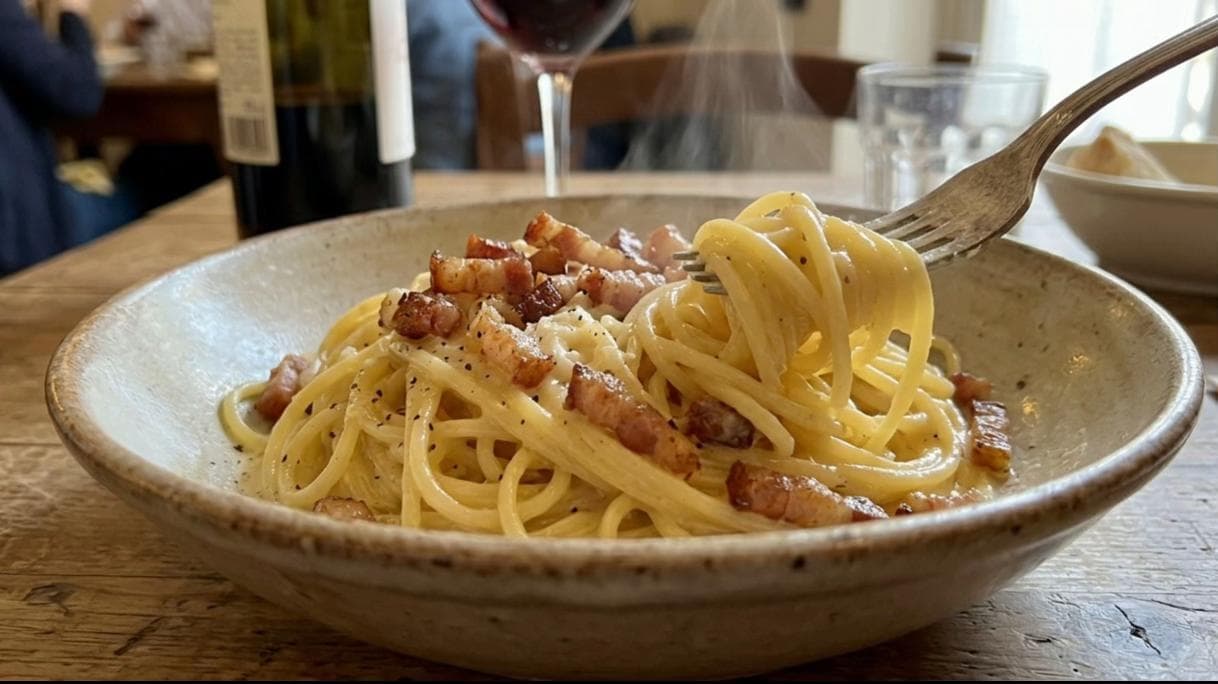
Cacio e Pepe — The Authentic Roman Pasta Recipe (No Cream)
Born in the alleyways of Rome, this ancient pasta defies culinary logic: three humble ingredients, a centuries-old technique, and a silky sauce that perfectly coats every strand of spaghetti. No cream, no shortcuts.
🛒 Ingredients
4 servings
- 14 oz spaghetti (or tonnarelli, ideally)
- 7 oz (about 2 cups) Pecorino Romano DOP, finely grated with a microplane
- 2 tsp whole black peppercorns (Tellicherry or Sarawak preferred)
- 1 tbsp coarse salt (for the pasta water)
- ¼ cup pasta cooking water, reserved (approximate)
🛍️ Recommended tools
Amazon affiliate links
Watch the original video
Watch on TikTokDirections
- 1
Bring 3 quarts of water to a boil in a large pot. Salt moderately — less than usual, since Pecorino is very salty. Cook the spaghetti 2 minutes less than the package directions to keep it very al dente.
- 2
While the pasta cooks, coarsely crush the black peppercorns in a mortar or under a heavy pan — you want irregular shards, not fine powder. Toast the crushed pepper dry in a large non-stick skillet over medium heat for 60 seconds, until fragrant. Remove from heat.
- 3
Make the Pecorino cream: in a cold bowl, combine the grated Pecorino with 3–4 tbsp of warm pasta water (not boiling — max 140°F to prevent the cheese from seizing). Work vigorously with a fork until you get a smooth, thick paste about the consistency of heavy cream. Add more water if needed.
- 4
Return the skillet with the pepper to high heat. Using tongs, transfer the spaghetti directly from the boiling water into the skillet (a little water clinging to the pasta is fine). Add a ladle of pasta water. Toss vigorously over high heat for 2 minutes to finish cooking and build up the starch.
- 5
Remove the skillet from the heat — this is critical. Wait 30 seconds for the temperature to drop slightly. Pour the Pecorino cream over the pasta and toss energetically with tongs in circular motions. If the sauce seems too thick or dry, add a few drops of pasta water. If too thin, return to very low heat for 30 seconds, tossing constantly. The sauce should coat the pasta without pooling.
- 6
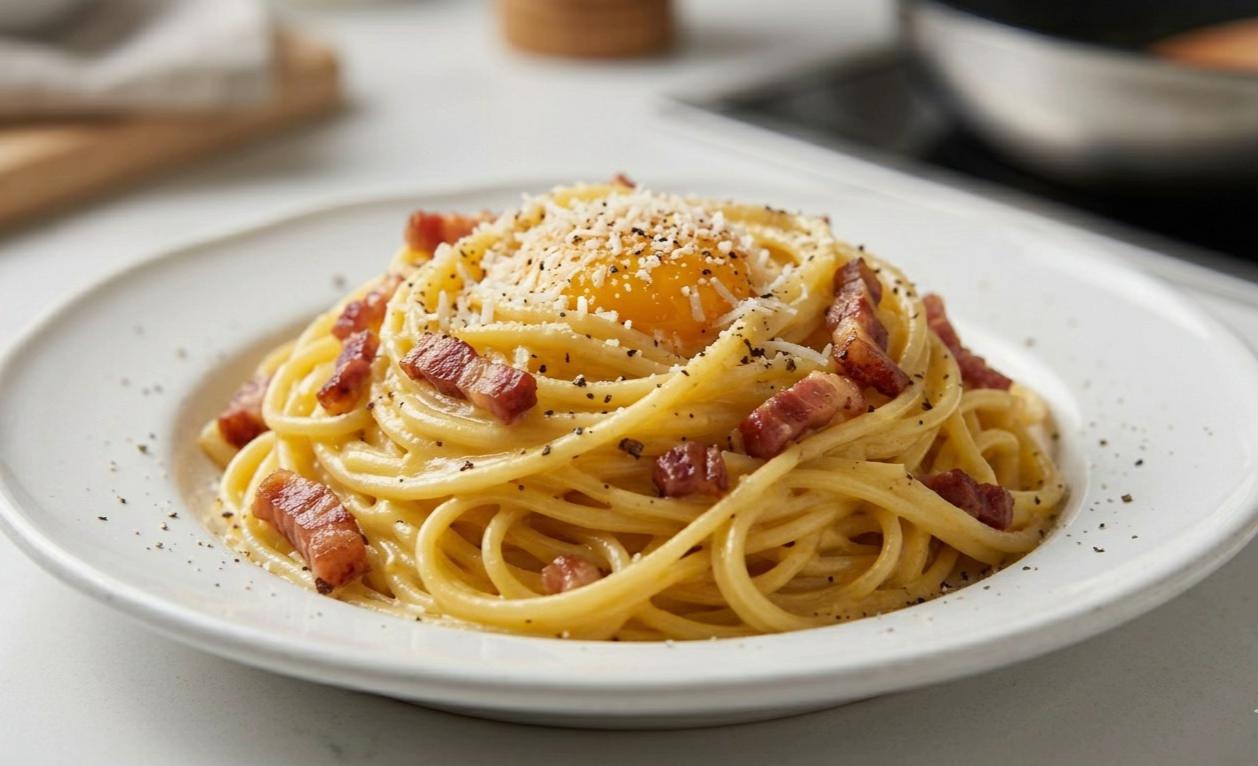
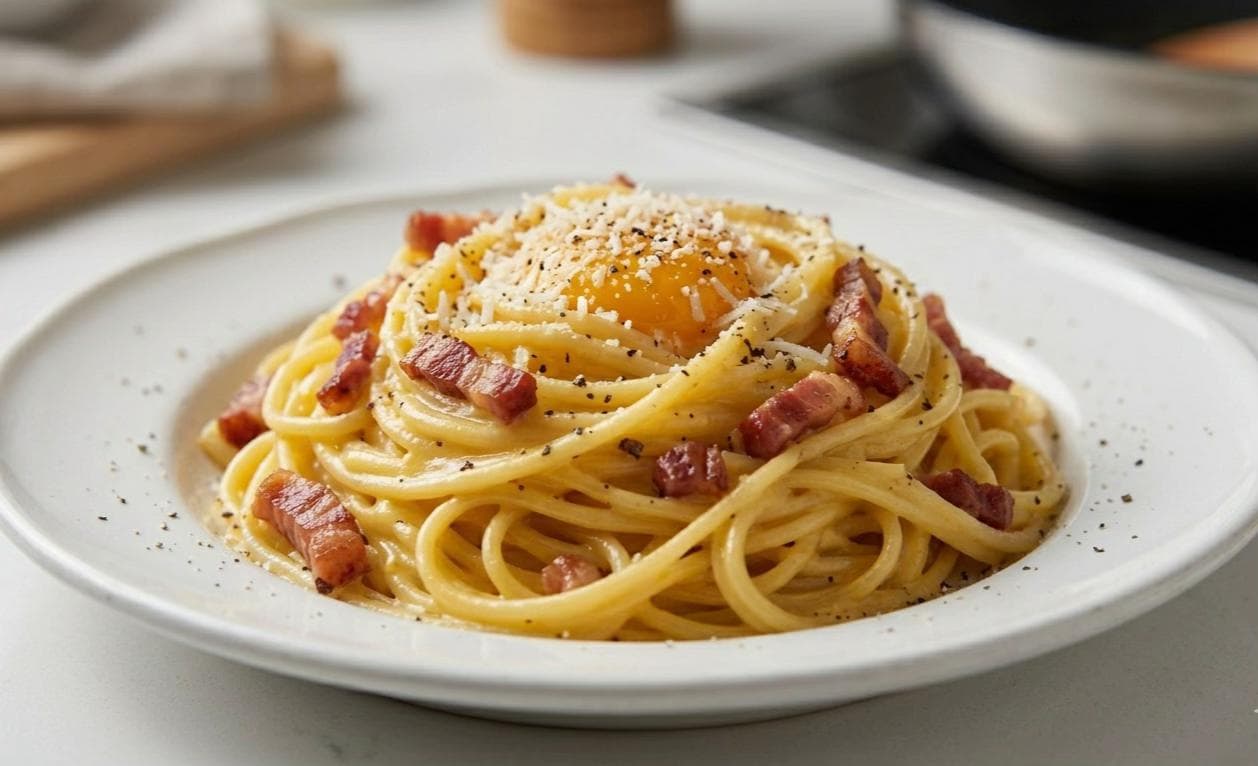
Plate immediately in warm shallow bowls. Finish with a generous crack of freshly crushed black pepper and, optionally, a light snowfall of extra Pecorino. Serve at once.
💡 Chef's Tip
The real pro secret: save a full cup of pasta water before draining — it's liquid gold. And always work off the heat when adding the cheese. The residual heat from the pasta is enough to create the emulsion; direct flame turns the Pecorino into an unrecoverable clump. If the sauce breaks despite your best efforts, a few drops of pasta water and vigorous off-heat tossing can save it.